
Business idea · NZ · 2026
Start a House Washing Business in NZ
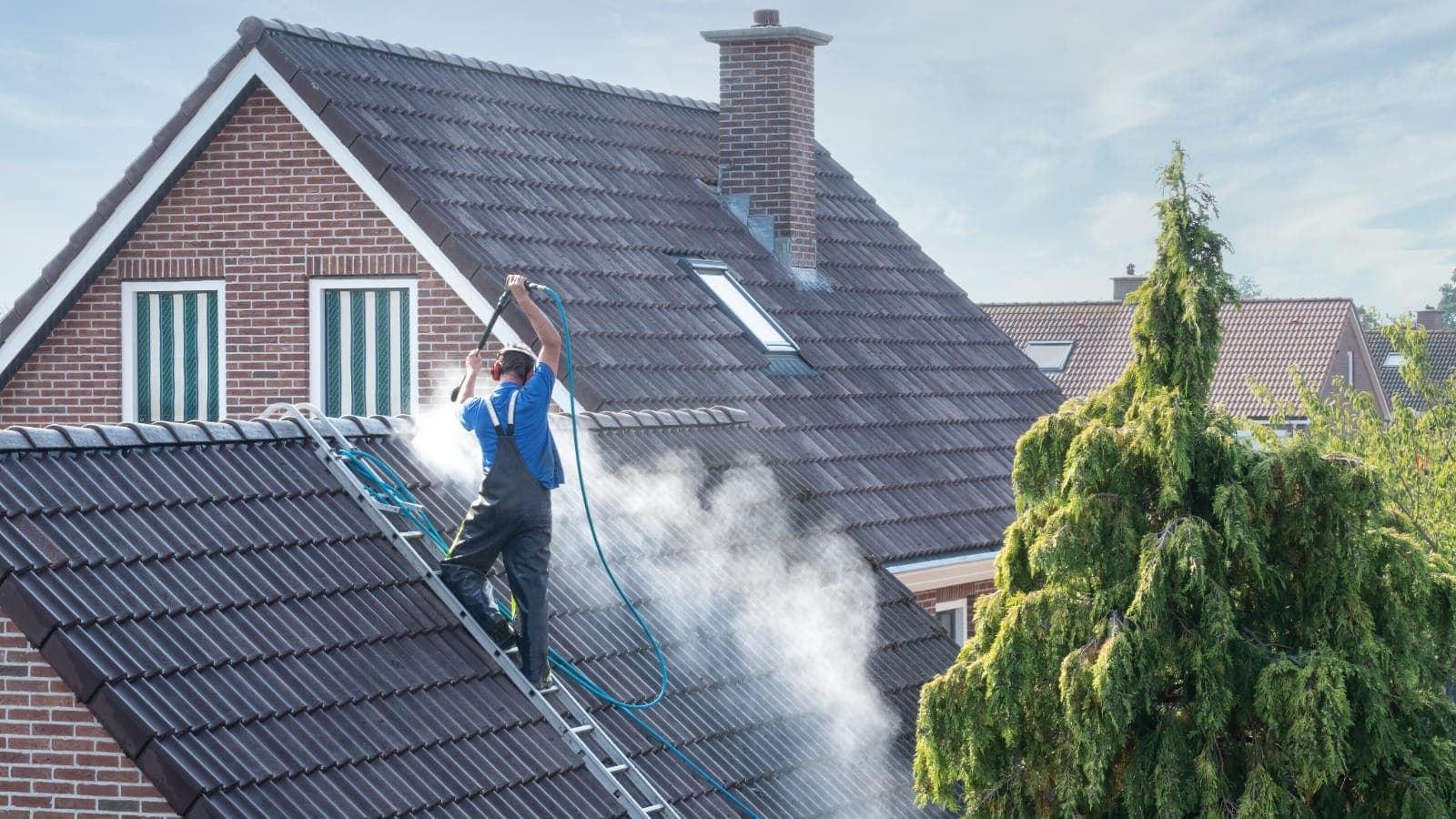
TL;DR
House washing is one of the most lucrative single-service businesses in NZ — $400–$800 per job, jobs take 2–4 hours, and a solo operator can comfortably do one job per day. Higher startup cost than lawn mowing ($3,000–$8,000 for proper gear) but the per-hour rate is significantly better.
Startup cost
$3,000–$8,000
Realistic earnings
$1,500–$3,000/wk solo year 1
Earnings explorer
Run the numbers for your situation
Mix of single-storey + double-storey house washes. Move the sliders to see realistic monthly and annual figures, plus how long the startup capital takes to pay back.
Per month
NZ$11,610
Annual run-rate
NZ$139,320
Weeks to recoup setup
2 weeks
Against NZ$5,000 startup
Modelled estimate, not a guarantee. Real outcomes depend on doing good work, answering the phone fast, and how aggressively you fill the calendar in the first 8–12 weeks.
What you need to start
- ▸A commercial-grade petrol water blaster (3,000–4,000 PSI) — $1,500–$3,500
- ▸A soft-wash setup (low-pressure pump, hose, dosatron) — $800–$2,000 if going premium
- ▸Surface cleaner attachment (the round disc thing for driveways) — $150–$300
- ▸House washing chemicals — sodium hypochlorite, surfactant — $100–$300/mo
- ▸Long extension lances (12–24 ft) for two-storey houses
- ▸PPE — full waterproofs, eye protection, respirator
- ▸A trailer to carry the blaster + tank
- ▸Public liability insurance — $50–$100/mo (higher cover for water blasting)
Why this is AI-proof
Houses get dirty from the outside. Roofs grow moss. Driveways stain. Chimneys streak. None of this gets fixed by software. The work requires physical presence, judgment about what's safe to blast and what isn't, and the customer wanting someone they can trust climbing on their roof. Not displaceable.
Why house washing is the highest-margin starter business in NZ
Lawn mowing is the easiest to start. Cleaning is the steadiest. House washing is the highest-margin. A typical house wash on a 3-bedroom NZ home runs $400–$700 and takes a competent solo operator 2.5–4 hours. That's $100–$200 per hour gross — significantly better than mowing or cleaning at the same skill level.
The catch: higher startup cost (you need a proper commercial water blaster, not the consumer-grade unit from Bunnings) and a bit more skill — you can damage paint, blow grout out of brickwork, or strip cedar weatherboards if you don't know what you're doing. There's a learning curve, but it's a couple of weekends, not a TAFE course.
Soft wash vs high pressure — what NZ customers actually want
The industry has split into two distinct approaches:
- High-pressure water blasting — fast, satisfying, works on concrete and most exterior cladding. Risk: damages paint, grout, soft cedar, and old sealants if pressure is too high or angle is wrong.
- Soft wash — low pressure (under 500 PSI) plus targeted chemicals (sodium hypochlorite + surfactant) that kill mould and lift grime. Slower, gentler, what Auckland's premium end of the market wants for cedar weatherboards and tile roofs.
Strong operators offer both and pick the right method per job. If you're starting out, get the high-pressure setup first (it does 80% of jobs) and add soft wash gear in month 4–6 when you have repeat customers asking for cedar.
What you can realistically earn
Standard NZ house wash pricing in 2026:
- Single-storey, 3-bed weatherboard or brick: $400–$600
- Two-storey, 4-bed: $600–$900
- Driveway / concrete pad cleaning: $200–$400 (often added to the wash)
- Roof wash (moss kill + soft wash): $500–$1,200
- Gutter cleaning: $150–$300 (great upsell)
- Solo operator, full-time, peak season: 5–7 jobs per week. Gross revenue $2,500–$4,500/wk.
Year 1 realistic full-time numbers: $80k–$140k gross. Hire one staff member by year 2 and you're at $150k+ comfortably with two going.
Seasonal pattern
Demand is heavily skewed to spring and pre-Christmas (people getting their house ready for entertaining or selling). October to March is the peak. June to August is slow. Strong operators bridge winter with gutter cleaning, moss treatment (a moss kill in autumn is the best time of year for it), and commercial work — petrol stations, takeaway shops, anything with concrete that needs blasting.
Getting your first ten customers
Same playbook as lawn mowing — website that ranks, GBP, suburb-targeted SEO content, then flyers. House washing has one extra leverage point: real estate agents.
- Build the site and get it ranking in your suburbs
- Verify the GBP (category: 'Pressure washing service')
- Take genuinely good before-and-after photos. House washing is one of the most visually satisfying service businesses — the photos sell themselves
- Get on every Auckland/Christchurch/Wellington 'house washers' Facebook group and Trade Me service listing
- Pitch real estate agents directly. Houses being prepped for sale are a steady, premium-rate stream — agents want their listings looking sharp and they don't shop on price
Insurance and safety — non-negotiable
Public liability is mandatory — you'll be near windows, paint, cars, and people. Standard cover is $1M which costs $50–$100/mo for a water blasting operation. Don't skip this. Don't go to a job without it.
If you're going to work above ground level — two-storey houses, roofs — get height training (Site Safe in NZ runs short courses) and proper fall protection. WorkSafe takes height work seriously and one accident on a roof without proper gear ends your business.
Sole trader for now
Start as a sole trader. Use the free IRD message generator to register in 10 minutes. Incorporate later if you grow past 3–4 staff. The capital cost of the gear is high enough that some operators start as a limited company from day one to ringfence personal assets — that's a defensible call but not necessary.
Common questions
Do I need a licence to start a house washing business in NZ?
No formal licence is required for residential house washing in New Zealand. You'll want public liability insurance ($1M cover, $50–$100/mo), and if you're working at height (roofs, two-storey houses) you should complete Site Safe height training. WorkSafe expects working-at-height plans for any work above 3 metres.
What's the difference between a residential and commercial water blaster?
Pressure rating, flow rate, and engine quality. A consumer-grade Bunnings water blaster runs 1,800–2,200 PSI and won't last six months of daily commercial use. A proper commercial petrol unit runs 3,000–4,000 PSI, has a Honda or Briggs & Stratton engine, and costs $1,500–$3,500. Don't try to start a business with a consumer-grade unit — it's a false economy.
What can I realistically charge for a house wash in NZ?
$400–$600 for a single-storey 3-bedroom house. $600–$900 for a two-storey 4-bedroom. Roof washing is priced separately at $500–$1,200. Driveway cleaning is a common add-on at $200–$400. Auckland is at the top of the range, regional cities at the bottom. Premium soft-wash specialists in upmarket suburbs charge 30–50% more.
Is house washing seasonal in NZ?
Yes. October–March is peak (people preparing for summer entertaining or selling their house). June–August is slow because of weather and lower demand. Strong operators bridge winter with gutter cleaning, moss kill treatments and commercial work (forecourts, takeaway shops). Plan for winter to be 40–60% of summer revenue and build cash reserves through summer.
How long does it take to get good at it?
About 10–15 jobs to get fast and consistent. Watch a few hours of YouTube content from established operators (Aussie content is excellent for technique), spend a couple of weekends practising on your own house and family members' houses, and you'll be commercially capable. Speed comes with reps — month 3 jobs take half the time of month 1 jobs.
Is there room in the market or is it saturated?
Genuinely uncrowded in most NZ cities. The existing supply is dominated by older operators with weak online presence — they show up on word-of-mouth alone. New operators with a proper website, GBP and local SEO can rank above them inside 4 weeks and capture the search-driven half of the market with no real resistance. Auckland CBD is the only patch where it's competitive enough to be hard.
Where this works in NZ
Self Made's city guides recommend this idea in the following locations — each links through to the local playbook with suburbs, demand signals and what to expect.
Auckland · NZ
Auckland →
West Auckland's wet microclimate (Henderson, Massey, Hobsonville) drives chronic moss + algae on weatherboard + concrete. Premium soft-wash specialists dominate the cedar-heavy North Shore + Eastern Bays at 30%+ markup.
Wellington · NZ
Wellington →
Hill-suburb weatherboard + cedar (Khandallah, Karori, Wadestown, Ngaio) ages aggressively in the Wellington wind/rain. Annual exterior wash demand is per-capita among NZ's strongest. Soft-wash specialists charge premium for the cedar work.
Canterbury · NZ
Christchurch →
Newer post-rebuild housing stock has concrete pads + sealed driveways across most newer suburbs — annual exterior wash + driveway clean is the standard. Cedar specialists do well in the older Fendalton + Cashmere belts.
Waikato · NZ
Hamilton →
Hamilton's hot-humid summers + wet winters drive heavy moss + algae on new-build cladding. First-house-wash demand is essentially built into the new-subdivision rhythm.
Bay of Plenty · NZ
Tauranga →
Mount Maunganui + Pāpāmoa face direct sea spray — annual house wash is essentially mandatory; cedar care + sea-air weatherboard knowledge is a $30–50% premium niche.
Otago · NZ
Dunedin →
Cool damp climate + Victorian + Edwardian timber + mature trees = chronic moss + algae. Soft-wash specialists who can handle heritage timber outearn pressure-only operators by 30–50%.
Manawatū-Whanganui · NZ
Palmerston North →
Manawatū wind + dry-summer dust + heavy Pacific rainfall = exterior wash demand is steady. Pair with driveway pressure washing for new-build subdivisions.
Northland · NZ
Whangārei →
Humid subtropical climate drives chronic moss + algae on cladding + roofing; annual wash + roof treatment is the standard. Sea-air-affected coastal homes (Onerahi, Whangārei Heads) need extra care.
Taranaki · NZ
New Plymouth →
Sea air + Taranaki wind + heavy rainfall = chronic moss + algae. Coastal weatherboard homes need annual wash; soft-wash specialists charge premium for cedar work.
Hawke's Bay · NZ
Hastings →
Hot dry summers + dust deposits from horticulture + sea-air weathering on coastal east = annual exterior wash is the standard. Pair with driveway pressure washing.
Waikato · NZ
Cambridge →
Cambridge's mature trees + post-rural dust + lakefront moisture = chronic moss + algae. Annual exterior wash + roof treatment is the standard for older Cambridge houses.
Otago · NZ
Queenstown →
Alpine grit + winter road salt + dry-summer dust ages exteriors fast. Annual exterior wash is built into property maintenance budgets across Jack's Point, Lake Hayes Estate, Closeburn, Frankton.
Otago · NZ
Wanaka →
Alpine grit + dry-summer dust + lakefront salt = annual exterior wash is built into property maintenance budgets. Premium homes (Hāwea, Cardrona, lakefront) charge accordingly.
Bay of Plenty · NZ
Rotorua →
Sulphur + volcanic-dust deposits weather exteriors faster than most NZ. Annual exterior wash + roof treatment is essentially built into household budgets, especially in suburbs near the geothermal vents.
Hawke's Bay · NZ
Napier →
Sea air + Art Deco painted-stucco exteriors weather aggressively. Annual exterior wash is essentially mandatory along the coastal suburbs (Marine Parade, Westshore, Bay View). Heritage-paint knowledge + soft-wash skill commands a premium.
Tasman · NZ
Nelson →
Sea-air weathering + dry summers + spore deposits in coastal suburbs (Atawhai, Tahunanui, Stoke) = annual exterior wash is essentially mandatory. Heritage timber care commands premium.
Southland · NZ
Invercargill →
Cool wet climate + heavy Southland moss + sea air on coastal Bluff/Otatara = chronic exterior weathering. Annual exterior wash + roof treatment is the standard.
Gisborne · NZ
Gisborne →
Coastal sea-air + east-cape sun + heavy spring rainfall = chronic moss + algae on weatherboard + paint. Annual exterior wash is the standard for older Gisborne suburbs.
Marlborough · NZ
Blenheim →
Hot dry summers + dust deposits from viticulture activity + sea-air weathering on coastal east = annual exterior wash is the standard. Wine-country lifestyle-property exterior work is a recurring premium niche.
West Coast · NZ
Greymouth →
NZ's highest rainfall + chronic West Coast moss + algae = annual exterior wash + roof treatment is essentially built into household budgets. Demand structurally higher per-capita than anywhere else in NZ.
Canterbury · NZ
Timaru →
Sea air on coastal Caroline Bay + Marchwiel + dry-summer dust + occasional South Canterbury frost damage = annual exterior wash + driveway clean is the standard.
Related ideas
If this fits the kind of work you're drawn to, you might also want a look at these — same shape, different patch.
$2,500–$6,000 startup
Start a Driveway & Surface Pressure Washing Business in NZ →
Concrete driveways stain, pavers grow moss, decks need annual revival.
$1,500–$3,500 startup
Start a Gutter Cleaning Business in NZ →
Boomers won't go up ladders.
$500–$2,500 startup
Start a Window Cleaning Business in NZ →
The lowest-capital service business after dog walking.
$15,000–$45,000 startup
Start a Roofing Business in NZ →
Roofing in NZ is governed by the LBP scheme — the Roofing licence class is the regulatory moat.
If this fits
Ready to build it?
Self Made builds the digital infrastructure, runs the marketing, and gets the phone ringing. Same playbook that took Mr Mow to dominating local search across his Southland patch in weeks.
Last updated 6 May 2026