
Business idea · NZ · 2026
Start a Driveway & Surface Pressure Washing Business in NZ
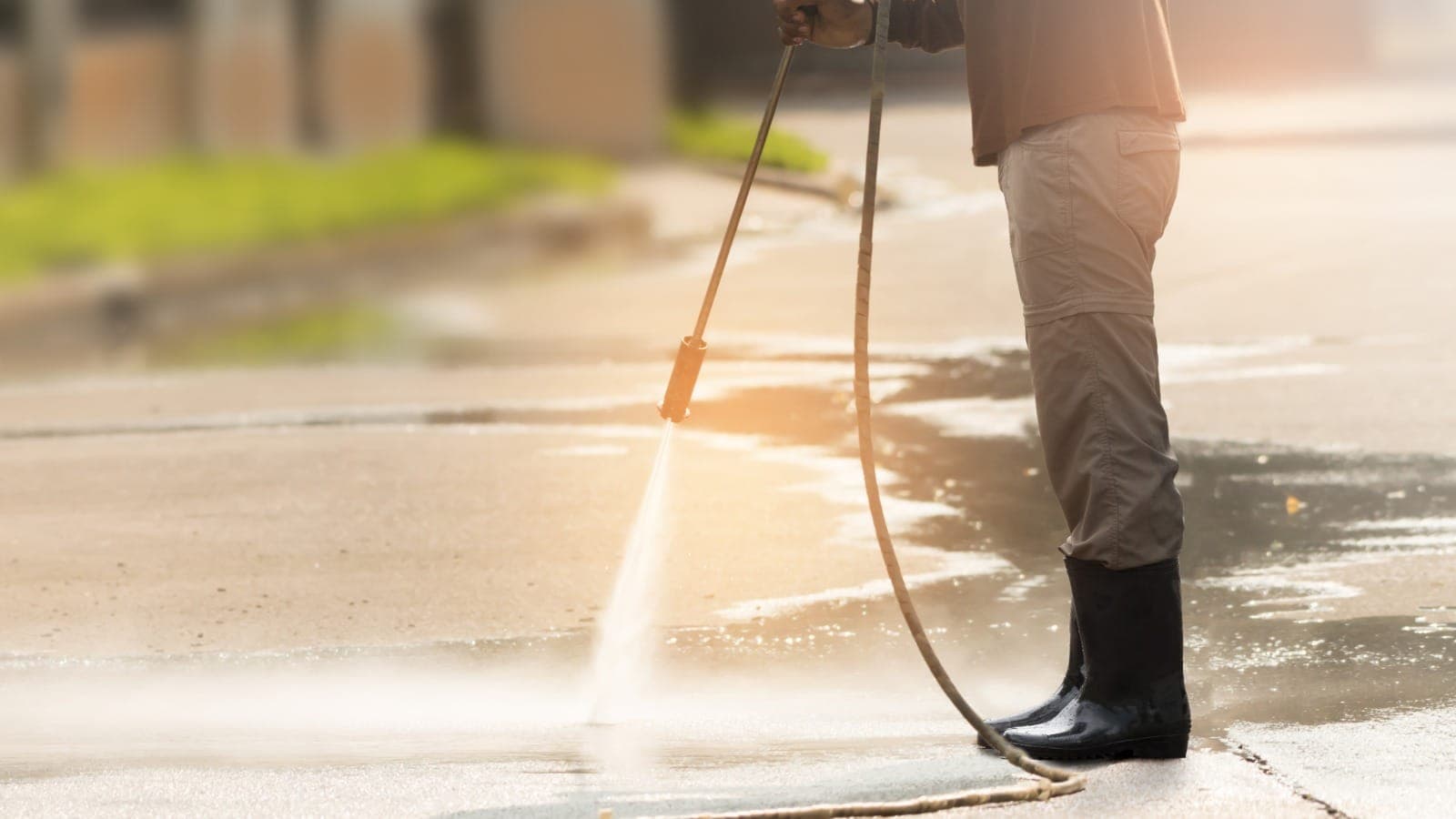
TL;DR
Concrete driveways stain, pavers grow moss, decks need annual revival. A pro-grade pressure washer + surface cleaner attachment + a website rank you for 'driveway cleaning [suburb]' inside a month. Premium pricing, fast turnaround.
Startup cost
$2,500–$6,000
Realistic earnings
$1,500–$3,000/wk full-time year 1
Earnings explorer
Run the numbers for your situation
Mix of driveways, paver patios, and decks. Move the sliders to see realistic monthly and annual figures, plus how long the startup capital takes to pay back.
Per month
NZ$8,256
Annual run-rate
NZ$99,072
Weeks to recoup setup
3 weeks
Against NZ$4,000 startup
Modelled estimate, not a guarantee. Real outcomes depend on doing good work, answering the phone fast, and how aggressively you fill the calendar in the first 8–12 weeks.
What you need to start
- ▸Petrol pressure washer (3,000–4,000 PSI commercial-grade) — $1,200–$2,500
- ▸Surface cleaner attachment (rotary, 16–24 inch) — $300–$700
- ▸Hose extensions, telescopic lance, chemical injector — $250–$500
- ▸Cleaning chemicals (eco-safe, council-compliant) — $100/mo restock
- ▸Water tank (200–400L) for sites without convenient water — $400–$900
- ▸Trailer or ute big enough to carry the kit — varies
- ▸Public liability insurance (NZ$2M+) — $50–$80/mo
- ▸Sole App for invoicing — purpose-built for sole traders, NZ launch June 2026
Why this is AI-proof
Standing on a sloped driveway with a 4,000 PSI lance, judging which spots need a chemical pre-treat, knowing where NOT to use the rotary because the concrete will spall — physical work, real judgment, irreplaceable.
Distinct from house washing — different gear, different jobs
House washing (soft wash exteriors, roofs) and pressure washing (concrete, paving, decks) are related but distinct businesses. Pressure washing focuses on horizontal surfaces — concrete driveways, paver patios, brick paths, timber decks, pool surrounds. The market is huge and growing because most homeowners with concrete drives can't justify owning a pro pressure washer for a once-a-year job.
Demand spikes spring (people prepping for summer entertaining) and pre-Christmas (driveways for guests). Annual recurring contracts are common — same customers, same job, every September.
What to charge in 2026 NZ
- Standard concrete driveway (single car): $180–$280
- Double / extended driveway: $260–$420
- Paver patio (40–80 sqm): $260–$440
- Deck wash + revive (with timber-safe chemicals): $320–$580
- Tile + grout external (pool surrounds, etc.): $300–$540
- Annual maintenance contracts (spring + pre-Xmas): $360–$640 per year
Funding
Three WINZ programmes can stack to help cover this.
If you're on Jobseeker Support, the Self-Employment Start-Up Payment can cover the pressure washer, surface cleaner, water tank and chemicals. Flexi-Wage adds up to NZ$16,800 over 28 weeks of living costs. Business Training Grant adds up to NZ$5,000.
The chemistry that lifts the price
Pressure alone shifts surface dirt. Pressure + the right pre-treatment chemistry shifts moss, oil stains, rubber marks, organic growth at depth. Customers will pay 30-50% more for a 'deep clean with treatment' over a basic wash — and the chemicals are $5–$15 of cost per job. Learn the chemistry (sodium hypochlorite ratios, surfactants, dwell times) and your hourly rate doubles.
Common questions
Council water restrictions — do I need to worry?
Some Auckland summers have residential water-use restrictions. Most pressure washers use 6–10 L/min — well within hand-held hose allowances. A water-recovery setup (vacuum the runoff) keeps you compliant during droughts AND wins you council / commercial work where stormwater discharge matters.
Can I use bleach?
Bleach (sodium hypochlorite) is the industry standard for moss / lichen treatment, but stormwater disposal is regulated — you can't just hose it into a drain. Use eco-safe alternatives (oxygen-based) for residential work; reserve bleach for hard-surface commercial jobs with proper containment.
Single-trailer vs van setup?
Trailer first — keeps capital low, easy to sell on if needed. Once you're booked solid, a sign-written van with the gear permanently mounted makes set-up at each site 10× faster (which directly increases jobs-per-day). Plan the upgrade for month 6–12.
Related ideas
If this fits the kind of work you're drawn to, you might also want a look at these — same shape, different patch.
$3,000–$8,000 startup
Start a House Washing Business in NZ →
House washing is one of the most lucrative single-service businesses in NZ — $400–$800 per job, jobs take 2–4 hours, and a solo operator can comfortably do one job per day.
$1,500–$3,500 startup
Start a Gutter Cleaning Business in NZ →
Boomers won't go up ladders.
$15,000–$45,000 startup
Start a Roofing Business in NZ →
Roofing in NZ is governed by the LBP scheme — the Roofing licence class is the regulatory moat.
$500–$2,500 startup
Start a Window Cleaning Business in NZ →
The lowest-capital service business after dog walking.
If this fits
Ready to build it?
Self Made builds the digital infrastructure, runs the marketing, and gets the phone ringing. Same playbook that took Mr Mow to dominating local search across his Southland patch in weeks.
Last updated 6 May 2026