
Business idea · NZ · 2026
Start a Roofing Business in NZ
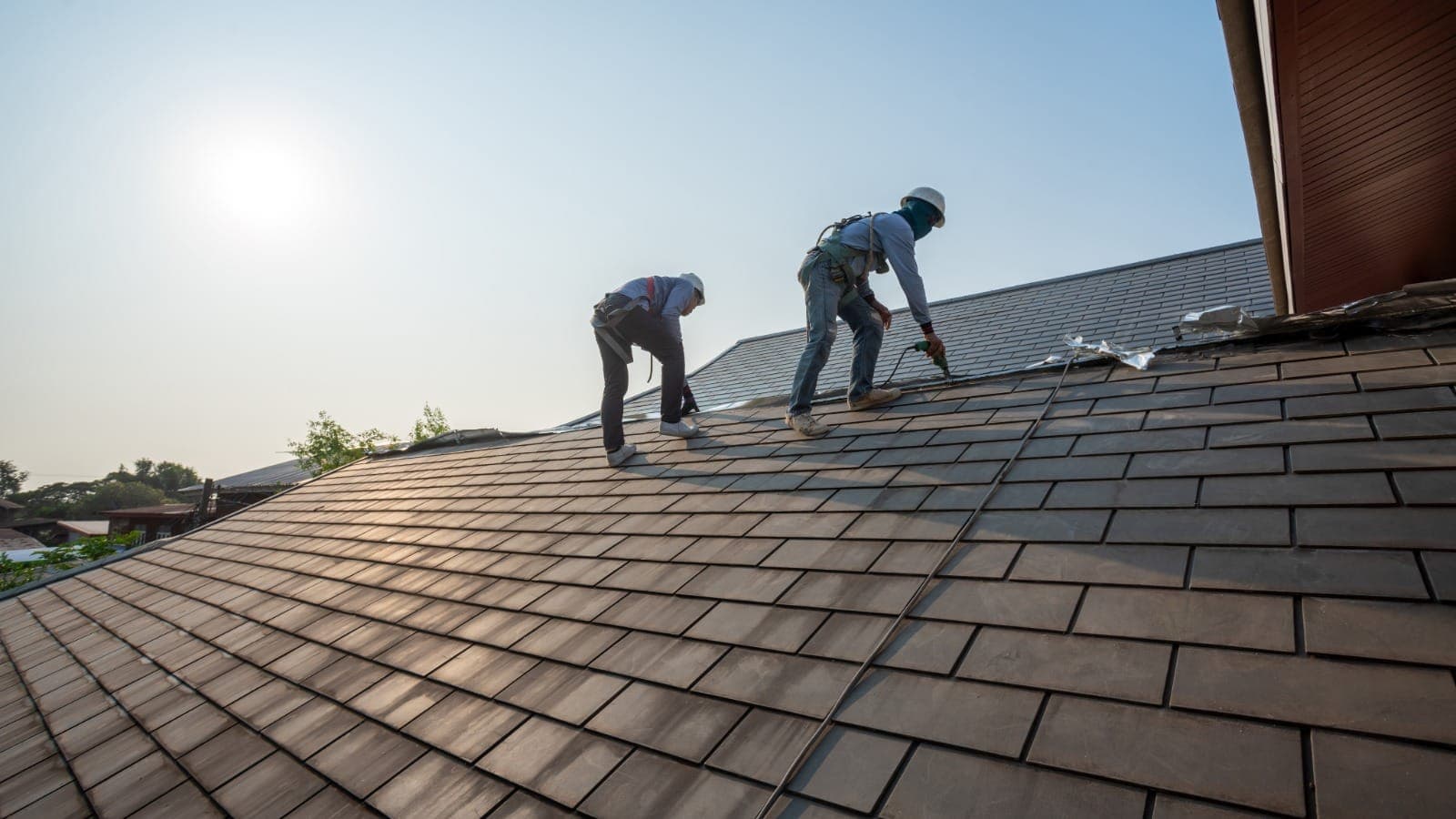
TL;DR
Roofing in NZ is governed by the LBP scheme — the Roofing licence class is the regulatory moat. The market is undersupplied: half NZ houses need a re-roof every 30-40 years, storm damage drives constant repair demand, and the existing supply skews to corporate roofers chasing commercial work.
Startup cost
$15,000–$45,000
Realistic earnings
$3,000–$6,500/wk full-time year 1
Earnings explorer
Run the numbers for your situation
Day-rate roofing work across re-roofs and storm repairs. Move the sliders to see realistic monthly and annual figures, plus how long the startup capital takes to pay back.
Per month
NZ$19,350
Annual run-rate
NZ$232,200
Weeks to recoup setup
7 weeks
Against NZ$30,000 startup
Modelled estimate, not a guarantee. Real outcomes depend on doing good work, answering the phone fast, and how aggressively you fill the calendar in the first 8–12 weeks.
What you need to start
- ▸Current LBP Roofing licence (annual renewal — restricted work moat)
- ▸Branded ute or van + trade trailer — $10,000–$25,000 used
- ▸Roofing tools: nail guns, snips, brake-press kit, sealant guns — $2,500–$5,500
- ▸Working-at-heights kit: harnesses, anchors, edge protection, scaffolding (rent / own) — $3,500–$8,000
- ▸Working-at-Heights and Asbestos awareness short courses (recommended) — $400–$900 each
- ▸Public liability ($5M+), contract works, statutory liability — $250–$420/mo
- ▸Master Roofers / Roofing Association of NZ (RANZ) membership — ~$800/yr
- ▸Sole App for invoicing — purpose-built for sole traders, NZ launch June 2026
Why this is AI-proof
Stripping an old longrun roof, scribing a flashing for a complex penetration, replacing 4 cracked tiles in driving rain on a Saturday afternoon — physical, height-exposed, weather-bound, regulated under the LBP scheme. Every roof is a different pitch, a different age, a different problem. There is no software substitute for a person on a ladder with a nailgun.
The LBP Roofing class — the regulatory moat
Roofing is one of the LBP classes under the Building Act 2004. Restricted Building Work that affects weather-tightness — which covers most re-roofing, flashings, valleys, penetrations — must be carried out or supervised by a licensed roofer. That's the regulatory layer that protects your hourly rate from unlicensed competition. The licence requires evidence of work, a portfolio, and an LBP assessment — most experienced roofers qualify on first application.
Annual CPD points (~12/yr) keep the licence current. The Roofing Association of NZ (RANZ) and Master Roofers run accredited CPD workshops — usually one weekend a year covers it. Lapsed licence = invalid sign-offs = council Code of Compliance refused = customer's insurance won't cover any subsequent leak. Stay current.
Where the residential market actually is
Half of NZ houses are 30+ years old. The original longrun steel from the 1980s-90s is at end-of-life, the tile roofs from the 1960s-70s need replacement or major repair, the 2000s leaky-build era left thousands of houses with weather-tightness problems still being remediated. That's a 25-year backlog of work that small roofing operators can pick from.
Lead sources: (1) Google search for 're-roofing [city]' and 'roof repair [suburb]' — the highest-intent traffic; (2) real estate agents — every pre-sale building report flags roof issues; (3) insurance assessors — IAG, Tower, Vero handle thousands of storm-damage roof claims annually; (4) builders + LBPs subcontracting roofing as part of larger renovations. Build relationships with 5-10 builders in your patch and that alone fills a calendar.
What to charge in 2026 NZ
- Hourly rate (skilled roofing, with team): $110–$160/hr per person
- Day rate (solo licensed roofer): $850–$1,200
- Day rate (small team — 2 roofers): $1,800–$2,500
- Standard re-roof, longrun (3-bed, ~150 sqm): $20,000–$45,000 labour + materials
- Re-roof tile-to-longrun conversion: $35,000–$75,000 (heavier remediation)
- Roof repair (storm damage, 1-2 sheets / cracked tiles): $400–$1,200
- Spouting + gutter replacement (full house): $3,500–$9,500
- Skylight install: $2,200–$5,500 each (excluding interior trim work)
- Roof inspection + condition report: $300–$650 (great upsell to homeowners post-storm)
Funding
Three WINZ programmes can stack to help cover this.
If you're between jobs and on Jobseeker Support, the Self-Employment Start-Up Payment can reimburse vehicle setup, harnesses + safety gear, and LBP licence costs. Flexi-Wage adds up to NZ$16,800 over 28 weeks of living costs. Business Training Grant adds up to NZ$5,000.
Working at Heights — the safety regime that's also a sales tool
Roofing is one of the highest-injury trades in NZ (WorkSafe data, 2024-25 published). Edge protection, harness systems, certified anchors and proper scaffolding are mandatory under the Health and Safety at Work Act 2015. Customers (especially commercial / body corporate) ASK about your safety setup and your insurance — being able to walk through the system articulately wins quotes against operators who can't.
For older roofs (pre-2000), asbestos is a real consideration. Cement-fibre tiles from the 1960s-70s and some bitumen membranes contain asbestos. NZ asbestos awareness training (one-day course, $300–$500) is a legal requirement for any work that disturbs material that might contain asbestos. Worth doing in year 1 — opens up the older-roof market that less-careful operators avoid.
Insurance + storm work — the dependable winter income
Every NZ winter brings a major storm event. Auckland 2023, Hawke's Bay 2023, Wellington 2026 — every event drives 6 months of insurance-funded roof repair work at fair commercial rates. Get on the assessor list at IAG (the largest), Tower, Vero and Vero Liability — they actively need roofers for claims work. The paperwork is heavier than residential cash work but the cheques clear reliably.
Common questions
How does the LBP Roofing licence application work?
Apply to the LBP Board with evidence of: at least 3 years' relevant on-tools experience under a licensed roofer or equivalent; a portfolio of completed work; a successful skills assessment. Cost is ~$1,300 for the application + ongoing $340/yr renewal. Most roofers with 3-5 years experience qualify on first application.
What earning shift am I looking at vs being PAYE?
Most PAYE-employed Roofers in NZ earn $65,000–$95,000/yr. Self-employed licensed Roofers with a steady book pull $140,000–$260,000+ annually (RANZ industry data, MBIE construction sector reports). The work is the same physically; the financial leap comes from owning the customer relationship, the materials margin, and the value of the licence sign-off itself.
Should I focus on longrun, tile, or membrane?
Longrun (corrugated steel) is the largest residential market — 70%+ of NZ residential roofing. Tile is a smaller subset, mostly Auckland + Hamilton older suburbs. Membrane is commercial / flat-roof specialist. Solo year 1, focus on longrun and add tile once you've got recurring work. Membrane is a year-2+ specialisation.
Is roofing seasonal?
Less than people assume. Re-roofs are weather-dependent (need 3-5 dry days for a 150 sqm re-roof), but repairs are constant — a leak in winter is more urgent than a leak in summer. Storm seasons drive insurance-funded work in winter. A balanced book covers seasonal dips. Most established roofers are booked 8-12 weeks ahead by year 2.
Two-person crew vs solo?
Two-person crew is the practical minimum for safe re-roof work — one person can't safely strip and re-lay a 150 sqm roof in 3 days. Most solo roofers run with a casual labourer ($28-35/hr) for re-roofs and work alone for repairs. Hire your first apprentice through BCITO once you've got 12 weeks of bookings ahead — they become billable from month 9-12.
Related ideas
If this fits the kind of work you're drawn to, you might also want a look at these — same shape, different patch.
$10,000–$30,000 startup
Start a Building Business in NZ (LBP) →
If you hold a current Licensed Building Practitioner (LBP) licence in Carpentry or Site Supervision, the residential renovation market is the most lucrative niche in NZ trades right now.
$8,000–$25,000 startup
Start a Plumbing Business in NZ →
If you hold a current Plumbers, Gasfitters and Drainlayers Board (PGDB) licence, you can earn $100–$160/hr inside a week of going live.
$8,000–$22,000 startup
Start an Electrical Business in NZ →
If you hold a current Electrical Workers Registration Board (EWRB) practising licence, the maintenance-and-fitout market is wide open.
$1,500–$3,500 startup
Start a Gutter Cleaning Business in NZ →
Boomers won't go up ladders.
$2,500–$6,000 startup
Start a Driveway & Surface Pressure Washing Business in NZ →
Concrete driveways stain, pavers grow moss, decks need annual revival.
If this fits
Ready to build it?
Self Made builds the digital infrastructure, runs the marketing, and gets the phone ringing. Same playbook that took Mr Mow to dominating local search across his Southland patch in weeks.
Last updated 6 May 2026