
Business idea · NZ · 2026
Start a Plastering & Stopping Business in NZ
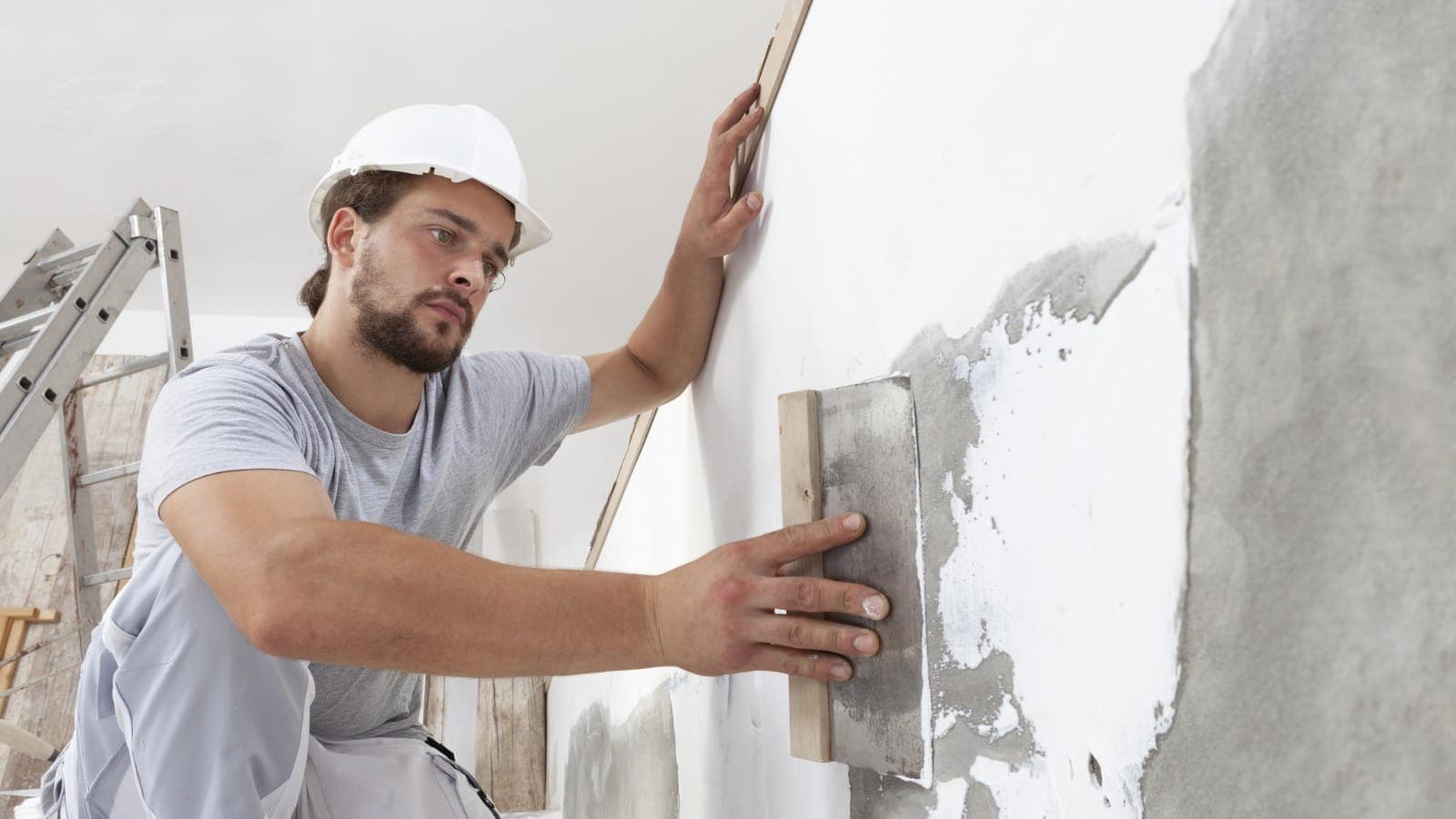
TL;DR
Every renovation, every new fit-out, every leaky-home remediation needs interior plaster + stopping work. The skill takes 6-12 months to become competent and the supply is genuinely thin — many plasterers stay employed in larger crews instead of going solo.
Startup cost
$3,000–$10,000
Realistic earnings
$2,000–$3,800/wk full-time year 1
Earnings explorer
Run the numbers for your situation
Hourly stopping + skim work for builders + direct customers. Move the sliders to see realistic monthly and annual figures, plus how long the startup capital takes to pay back.
Per month
NZ$16,340
Annual run-rate
NZ$196,080
Weeks to recoup setup
2 weeks
Against NZ$6,500 startup
Modelled estimate, not a guarantee. Real outcomes depend on doing good work, answering the phone fast, and how aggressively you fill the calendar in the first 8–12 weeks.
What you need to start
- ▸Stilts (essential for ceiling work, save your back) — $400–$900
- ▸Hawks, trowels (multiple sizes), mud pans, jointer / blade — $400–$800
- ▸Sander (orbital + pole sander), dust masks (P2 + P3) — $400–$700
- ▸Plasterboard tools: jab saw, knife, plaster lifter — $200
- ▸Compressor + textured-sprayer (optional, opens up high-speed jobs) — $1,500–$3,500
- ▸Drop sheets, plaster bins, stir paddle, mixer drill — $400
- ▸Public liability insurance ($2M+) — $50–$80/mo
- ▸Reliable van or ute big enough for sheets transport — varies
- ▸Sole App for invoicing — purpose-built for sole traders, NZ launch June 2026
Why this is AI-proof
Stopping the joints between plasterboard sheets so a homeowner runs their hand across and feels nothing. Skim-coating an old plaster wall to make it ready for paint. Mixing the right plaster consistency for a humid Auckland summer day. AI does none of it. The customer wants invisible craftsmanship — flawless walls — and only a person with a hawk + trowel + 500 hours of practice produces that.
Where the work is
Two main streams: (1) New-build subcontracting — Master Builders / GJ Gardner / Mike Pero new-build sites need stopping crews. Lower per-hour but reliable volume. (2) Renovation work — bathrooms, kitchens, additions, leaky-home remediation. Higher per-hour, more variable schedule, more direct relationships with LBP builders. Most successful operators run a mix.
The skill compounds. A plasterer with 5 years on the tools is 2-3× more productive (and 1.5-2× higher per-hour rate) than a plasterer with 1 year. Year 1 is grind; years 2-5 are when the skill premium pays off. The supply is thin because the apprentice pipeline is small — most NZ plasterers came up via informal training rather than formal apprenticeships.
What to charge in 2026 NZ
- Hourly rate (skilled): $80–$120/hr
- Day rate (solo): $640–$960
- Per-sheet stopping (subcontract to builders): $30–$45/sheet for standard work
- Stopping + 2-coat skim (full new-build room): $180–$320 per room
- Patch repair (small, residential): $180–$340 minimum call-out
- Whole-room replaster (after a leak repair): $700–$1,400
- Textured ceiling spray-and-finish (per ceiling): $400–$900
- Cornice install (per linear metre): $40–$70/m supplied + installed
Funding
Three WINZ programmes can stack to help cover this.
If you're between jobs and on Jobseeker Support, the Self-Employment Start-Up Payment can cover stilts, tools, sander, and PPE. Flexi-Wage adds up to NZ$16,800 over 28 weeks of living costs. Business Training Grant adds up to NZ$5,000.
Builder relationships are the entire business model
Plastering is a downstream trade — you come in after the framing, electrical, plumbing, and tape-and-stop, then before the painter. That means your customer pipeline is almost entirely OTHER tradies. Drop into 10-15 LBP builders + a few new-build companies in your patch in your first 30 days. Bring photos of recent work. Ask to be added to their stopping-list. The builders who add you will fill 70% of your calendar within 6 months.
The skill development path
Plastering is not formally licensed in NZ but BCITO (now part of Te Pūkenga) runs a 3-year apprenticeship in Interior Systems / Stopping. Even self-taught operators benefit from the BCITO unit standards as a CPD framework. Progressively learn: standard square-set stopping (year 1), level-5 finish for high-light walls (year 2), texturing + skim coating (year 2-3), specialist work like P50 (Level 5 fire-rated stopping for commercial) for premium subcontract work.
Common questions
Do I need a formal qualification to start?
No legal requirement, but BCITO apprenticeship + unit standards are the formal pathway. Self-taught is fine for residential work; you learn by doing. The lack of formal qualification is part of why the supply is thin — many capable plasterers stop at competent and never go solo. If you're prepared to do that, the demand is there.
What earning shift am I looking at vs being PAYE?
Most PAYE-employed plasterers in NZ earn $58,000-$80,000/yr. Self-employed plasterers with a steady builder relationship list pull $110,000-$180,000+ annually (BCITO industry data, NZ Master Builders contractor surveys). The financial leap comes from the per-hour rate jump + materials margin on direct-to-homeowner jobs.
Year 1 — solo or with a hand?
Solo for stopping is fine. A second pair of hands is invaluable for sheet-hanging (heavy, two-person work) and for ceilings. Most operators sub a casual labourer for sheet-up days ($35-$50/hr) and work alone for stopping days. As you scale, hire your first apprentice via BCITO in year 2-3.
Is this seasonal?
Mostly steady. Indoor work doesn't have weather dependency. Builder pipelines drive seasonality — most NZ builders quiet down 2-3 weeks at Christmas and through January, then pick up February onward. Build your direct-to-homeowner work to fill the December-January quiet.
Texture / spray work — separate skill?
Yes. Standard stopping is hand work (hawk, trowel). Texture / spray work (Insul-Rock, GIB-cove cornices, ceiling textures) requires a compressor + spray gun + specific technique. Adds 30-50% earning capacity and opens premium new-build work. Worth learning in year 2.
Related ideas
If this fits the kind of work you're drawn to, you might also want a look at these — same shape, different patch.
$10,000–$30,000 startup
Start a Building Business in NZ (LBP) →
If you hold a current Licensed Building Practitioner (LBP) licence in Carpentry or Site Supervision, the residential renovation market is the most lucrative niche in NZ trades right now.
$5,000–$15,000 startup
Start a Tiling Business in NZ →
Tiling is one of the highest-skill, highest-margin LBP-licensed sub-trades in NZ.
$1,500–$4,500 startup
Start an Interior Painting Business in NZ →
Most NZ painters chase commercial / new-build.
$1,500–$5,000 startup
Start a Handyman Business in NZ →
Most NZ tradies don't want to come out for a 90-minute job.
If this fits
Ready to build it?
Self Made builds the digital infrastructure, runs the marketing, and gets the phone ringing. Same playbook that took Mr Mow to dominating local search across his Southland patch in weeks.
Last updated 6 May 2026